2026-11-04
When are Japanese sweet potatoes in season? Varieties, curing and storage
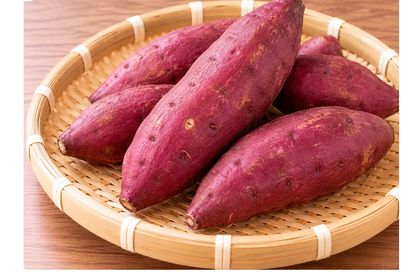
Japanese sweet potatoes (satsumaimo) are at their best from October to February. They are harvested from late August to November, but taste sweeter after a period of storage than straight from the field. This guide covers varieties, curing and storage, growing regions and export for people in the trade.
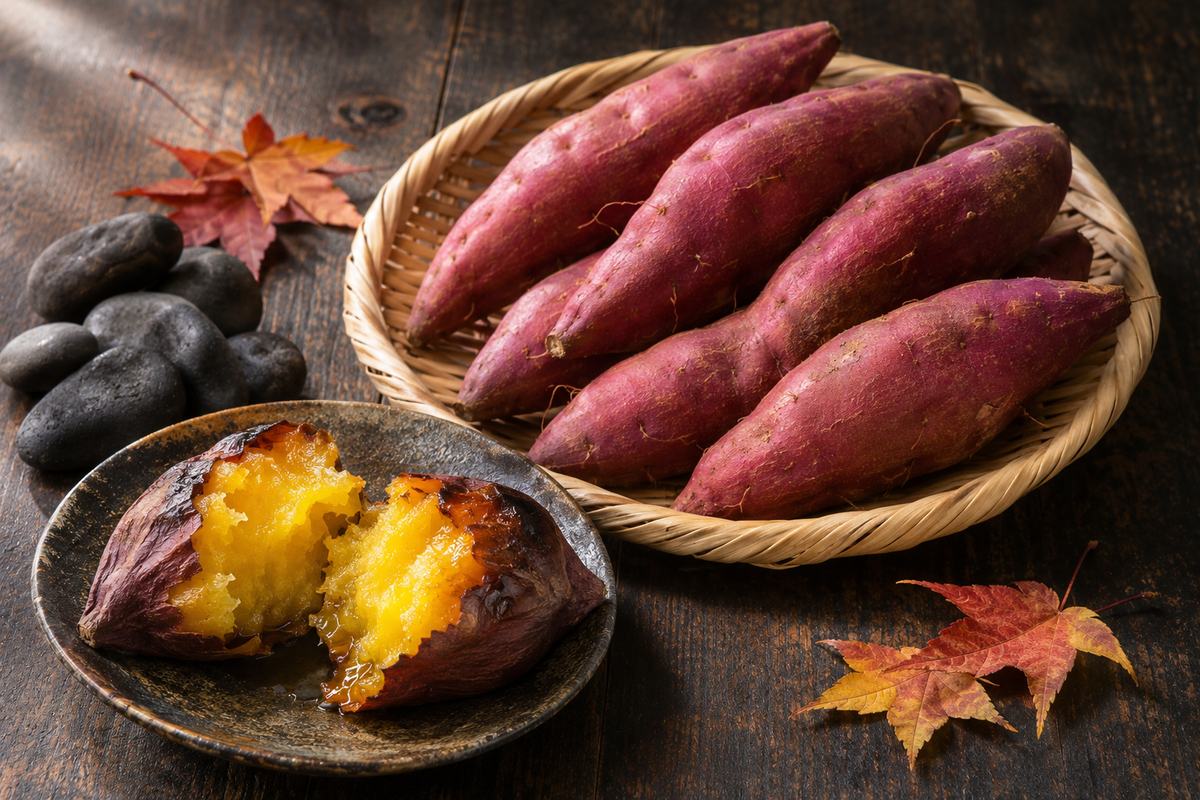
Sweet potato is one of the fastest-growing fresh produce exports from Japan. Roasted sweet potatoes are popular in Thailand, Hong Kong and Singapore, and sweet Japanese varieties sell at a premium. But a sweet potato is a living root, and it spoils quickly if temperature and humidity are mishandled. This guide covers the season, varieties, storage and export.
When are sweet potatoes in season? October to February
Harvest runs from late August to around November. Sweet potatoes are not at their best freshly dug, though. During storage after harvest, part of the starch turns into sugar and the roots grow sweeter. That is why the sweetest potatoes reach the shops from about October to February. Stored roots stay on the market into early spring.
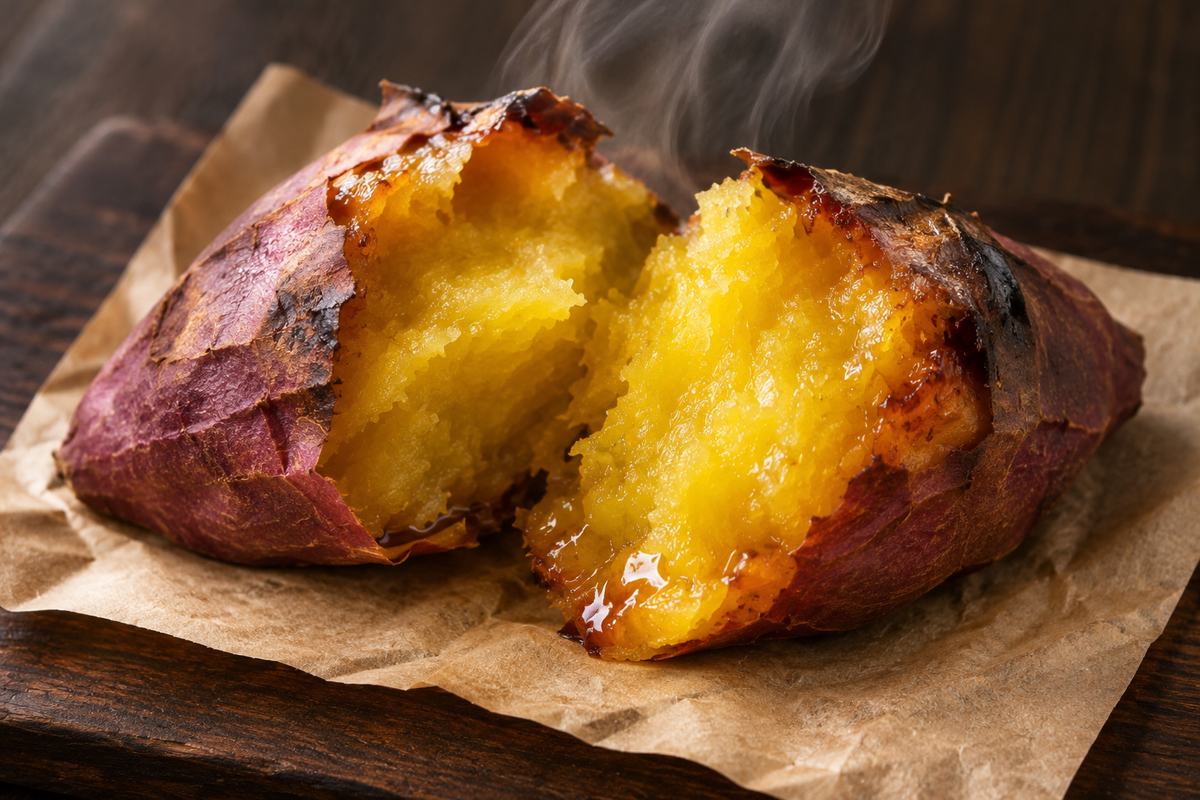
Cooking matters too. Sweet potatoes contain an enzyme that turns starch into maltose, and it works best when the potato passes slowly through roughly 60 to 75°C. Japanese stone-roasted sweet potatoes (yaki-imo) are so sweet because they are cooked slowly. A quick blast in the microwave rushes through that range, and the potato turns out less sweet.
Growing regions: Kagoshima and Ibaraki grow about 60%
According to the Ministry of Agriculture, Forestry and Fisheries, Japan produced about 700,000 tonnes of sweet potatoes in the 2025 crop year. Kagoshima grew 219,000 tonnes and Ibaraki 196,000 tonnes, together about 60% of the total, followed by Chiba (80,000 t) and Miyazaki (70,000 t).
Uses differ by region. About half of domestic demand is for fresh produce; the rest goes into shochu, processed foods such as sweets, and starch. Kagoshima and Miyazaki send a larger share to shochu and starch, while Ibaraki and Chiba grow mainly for the fresh market.
In southern Kyushu, foot rot disease (motogusare-byo), first found in Japan in autumn 2018, spread and cut production sharply. Damage has eased, but yields have not yet returned to their earlier level. When buying from southern Kyushu, check the year's crop early.
Varieties: moist and creamy versus dry and fluffy
Japan's variety mix has changed a great deal over the last 20 years or so. Former mainstays such as Beniazuma and Koukei No. 14 have declined, and moist, creamy varieties have taken their place.
- Beniharuka: now the leading variety, about a quarter of the planted area. High in sugar, turning moist and syrupy when roasted. Popular overseas for roasting
- Silk Sweet: a silky smooth texture. Milder sweetness than Beniharuka, and good for confectionery
- Anno-imo: a group of varieties spread from local sweet potatoes on Tanegashima island. Orange flesh that turns creamy when roasted
- Beniazuma: long the main variety in the Kanto region, and the classic dry, fluffy type. Good for tempura and simmered dishes
- Koukei No. 14: the line behind western Japanese regional potatoes such as Naruto Kintoki. Fluffy, with a delicate sweetness
Overseas buyers also tend to prefer the moist types. Offering the dry, fluffy types for cooking makes it easier to sell each variety for what it does best.
Curing and storage: the keys to sweetness and shelf life
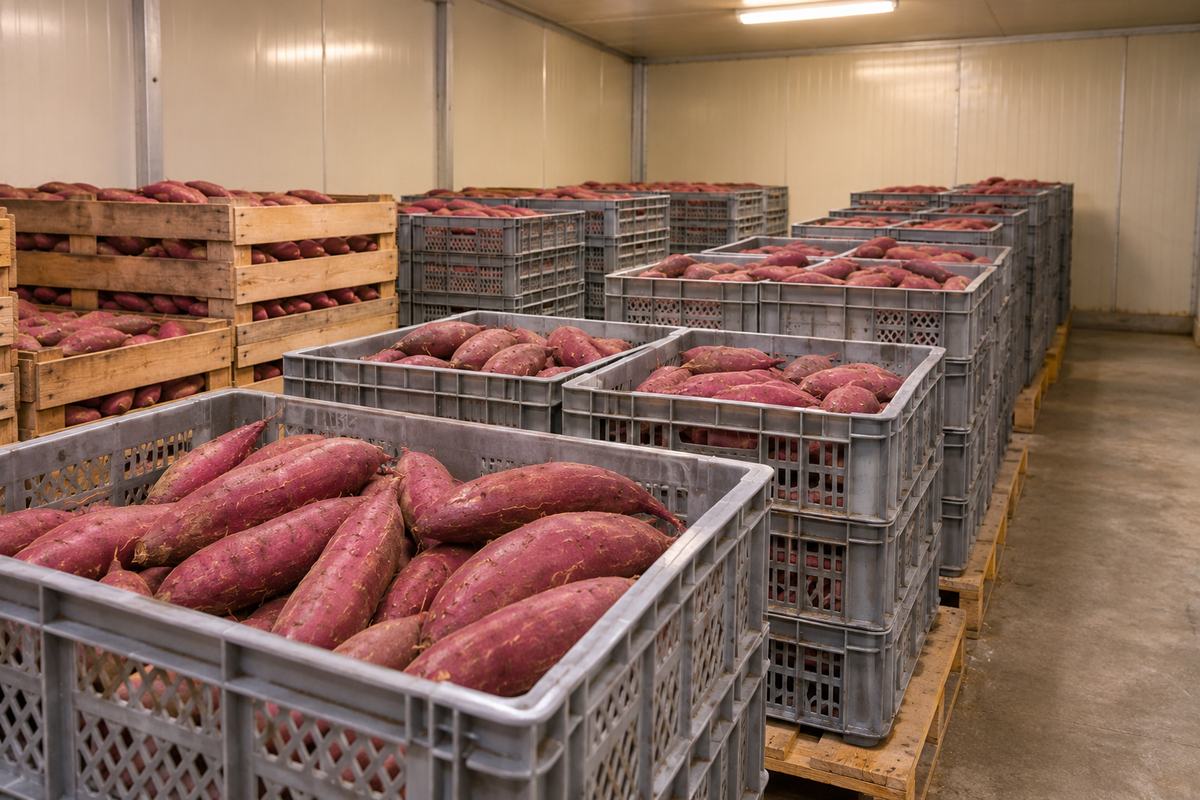
Freshly dug sweet potatoes are first cured. They are kept at 30 to 35°C and over 90% humidity for three to four days, so that a corky layer forms over the wounds made at harvest and keeps rot-causing fungi out.
Then they go into storage. According to Japan's National Agriculture and Food Research Organization (NARO), the ideal is 13 to 14°C at around 90% humidity.
- 9°C or below: chilling injury becomes likely. The inside darkens and the roots spoil more easily
- 15°C or above: the roots sprout and the skin colour deteriorates
- Low humidity: the roots shrivel and lose weight
This chilling injury is why Japanese households are told never to keep sweet potatoes in the fridge. In the trade, too, take care that warehouses and shipments do not get too cold in winter.
How to choose a good sweet potato
- Bright skin colour with gloss and firmness
- Even thickness and real weight in the hand
- Few root hairs and shallow root scars
- No black spots, wrinkles or soft patches. Rot spreads from these
- Syrup that has seeped out and hardened black at the cut ends is often a sign of a sweet potato
Notes from the export side
Sweet potato exports are growing. According to the Ministry of Agriculture, Forestry and Fisheries, exports in 2025 reached 4.5 billion yen and 9,417 tonnes, well above the 2.8 billion yen target. The main destinations are Thailand, Hong Kong, Singapore, Taiwan and Malaysia, and the government is aiming for 6.9 billion yen by 2030.
The biggest problem is rot in transit. According to NARO, winter sea shipments have seen average spoilage of about 25%, and shipments to Hong Kong take 10 to 14 days from dispatch to delivery.
- Sorting: remove damaged or diseased roots before shipping. NARO has also built a prototype machine that uses AI to detect roots at risk of rotting
- High-temperature curing: in a trial shipment to Hong Kong, spoilage was 0.2% for treated roots against 6.1% for untreated ones
- Packaging: sealing too tightly starves the roots of oxygen and speeds spoilage. Use oxygen-permeable packaging
- Temperature: keep shipments at around 13°C, as in storage, and do not let them get too cold
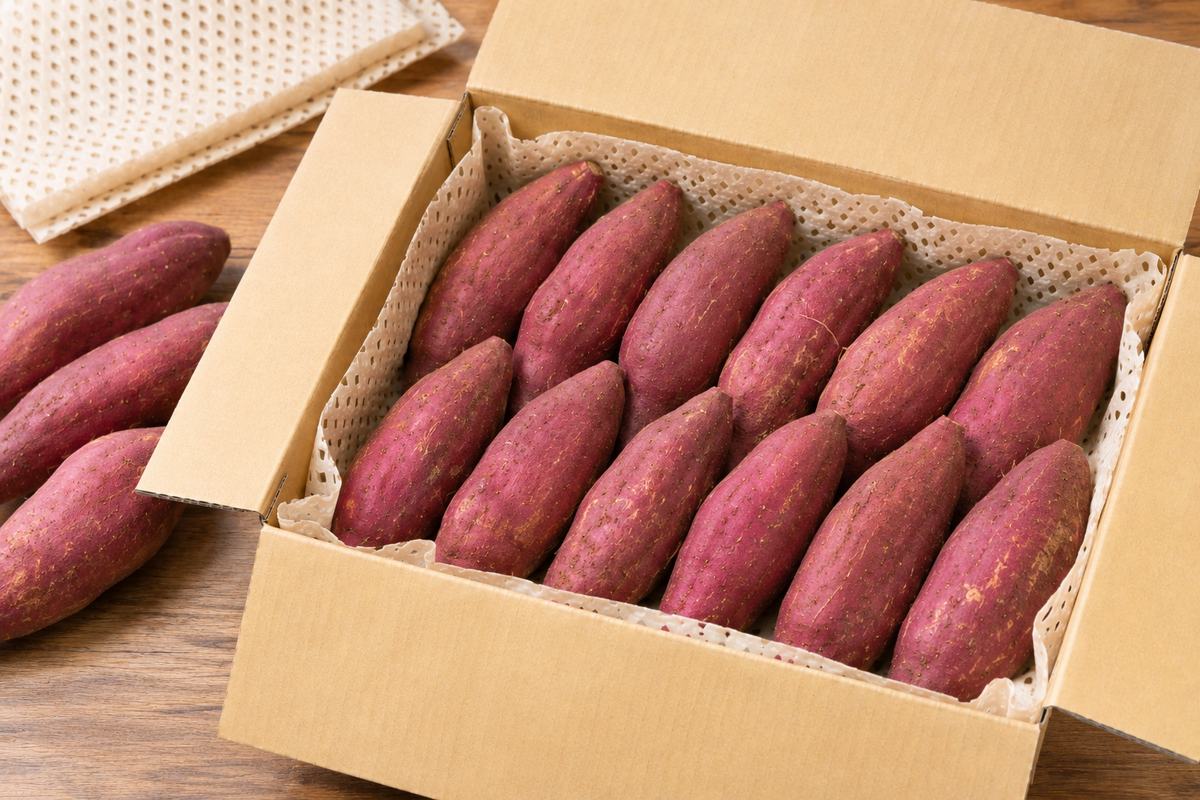
Fresh sweet potatoes are also subject to plant quarantine. Each country sets its own conditions, such as a phytosanitary certificate and no soil on the roots. Check the importing country's requirements before planning shipments.