2026-11-17
What are tsumamono? Japanese garnish vegetables, and the difference between ken, tsuma and karami
Tsumamono are the vegetables, leaves and flowers that garnish sashimi and Japanese dishes, adding colour and a sense of season. Here are the differences between ken, tsuma and karami, the main kinds, which ones are eaten and which are not, why they are available all year, and the regions behind them.
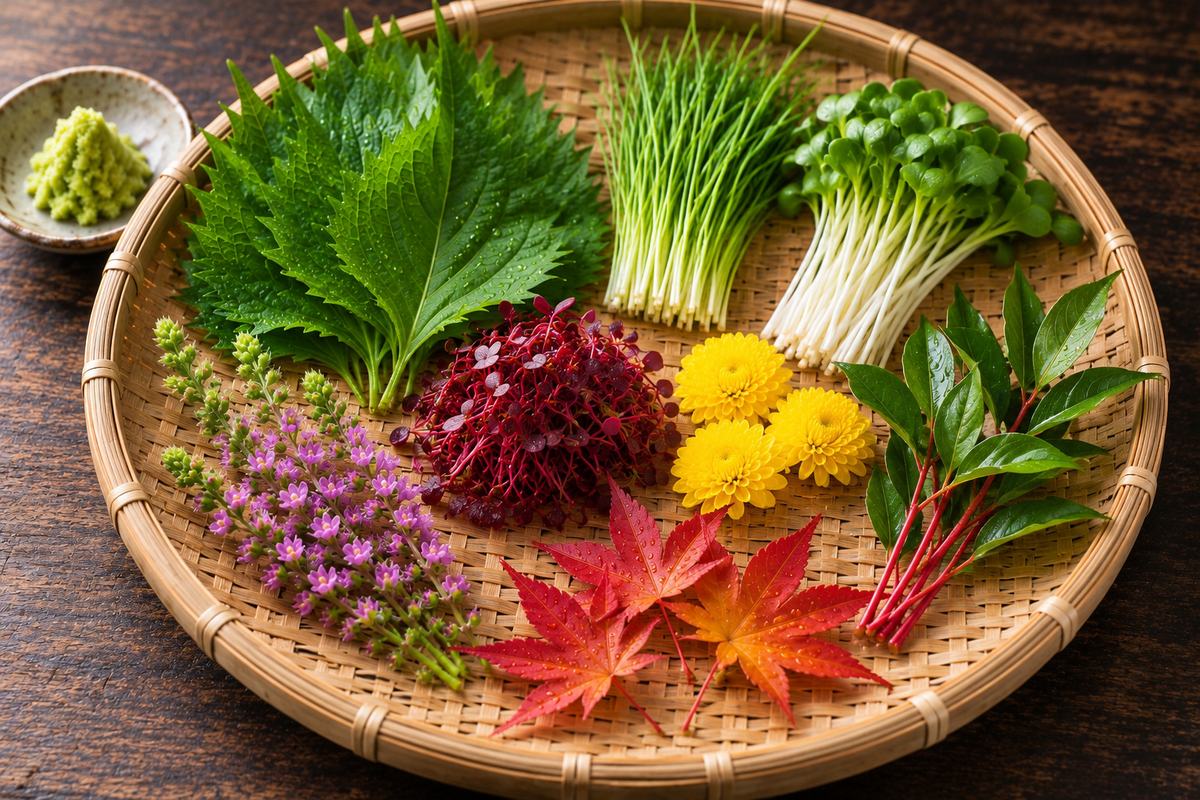
Tsumamono are garnish vegetables, leaves and flowers that add colour, aroma and a sense of the season to sashimi and other Japanese dishes. Shiso flower spikes, red water pepper sprouts (beni-tade), edible chrysanthemums and maple leaves are used in tiny amounts, yet they change the whole impression of a plate.
What are tsumamono?
The tsuma in tsumamono is said to mean something that stays close beside the main dish. With sashimi, it is the daikon, shiso leaves and small sprouts or flowers placed beside the fish.
Their role is more than decoration. Their aroma refreshes the palate, their pungent or fragrant compounds soften fishy smells, and they show the season at a glance. In Japanese cuisine these garnishes are also called ashirai.
The three sashimi garnishes: ken, tsuma and karami
Sashimi garnishes are traditionally thought of in three groups.
- Ken: finely shredded daikon, cucumber and similar. Laid under the sashimi or stood behind it to give the arrangement height
- Tsuma: shiso leaves, shiso flower spikes, red water pepper sprouts, negi sprouts, edible chrysanthemums, seaweed and so on. They add colour and aroma
- Karami: wasabi or ginger. They bring out the flavour of the fish and tone down fishiness
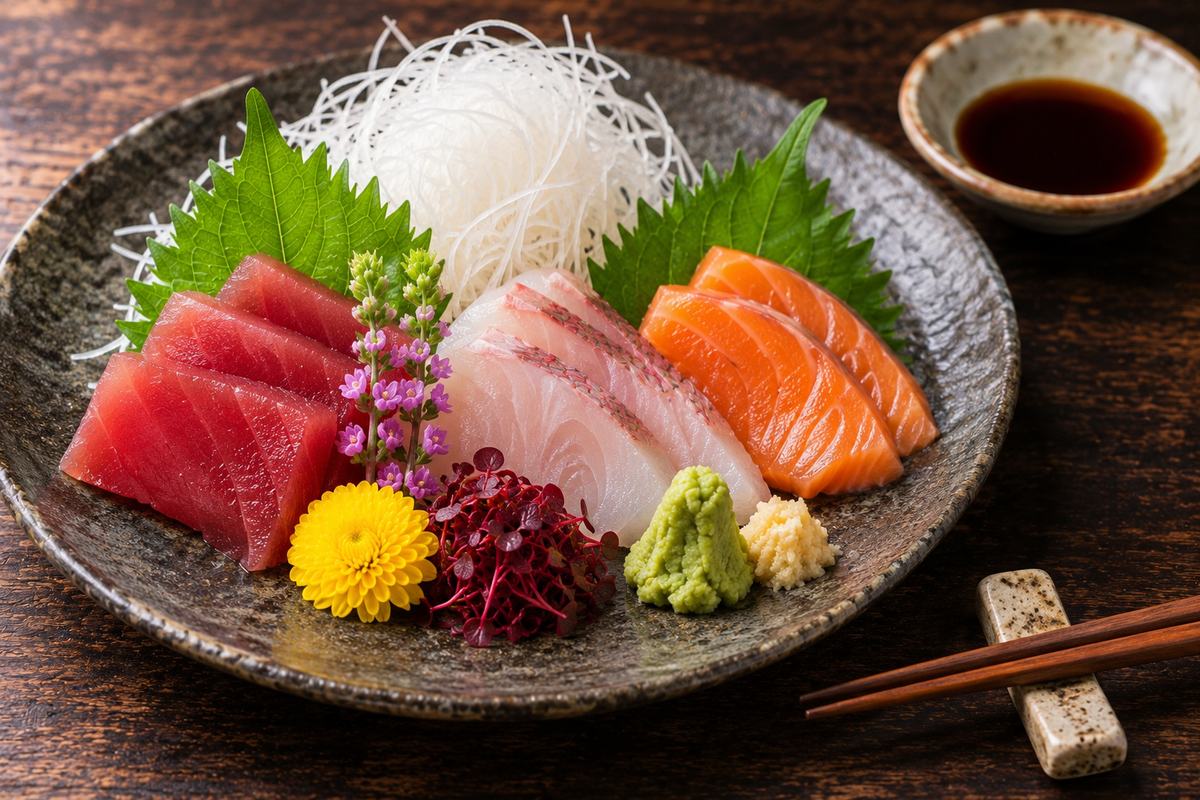
The shredded daikon that many people call 'sashimi tsuma' is, strictly speaking, ken. At home the two are often not distinguished, and neither use is really wrong.
The main kinds of tsumamono
Here are the garnishes listed in Washokuzai Calendar, grouped by form.
- Sprouts: daikon sprouts (kaiware), negi sprouts (me-negi), red water pepper sprouts (beni-tade) and others. Tiny young shoots with aroma or a little heat
- Spikes: shiso flower spikes (hanaho), just starting to bloom, and shiso seed spikes (hojiso), with seeds forming. Strip them into soy sauce to carry the shiso aroma
- Flowers: flowers grown to be eaten, such as small chrysanthemums, snapdragons and Bell Rose edible mini roses
- Leaves: shiso leaves (ōba), red-stemmed beach silvertop (bōfū), sansho leaf sprigs (kinome), maple leaves and others
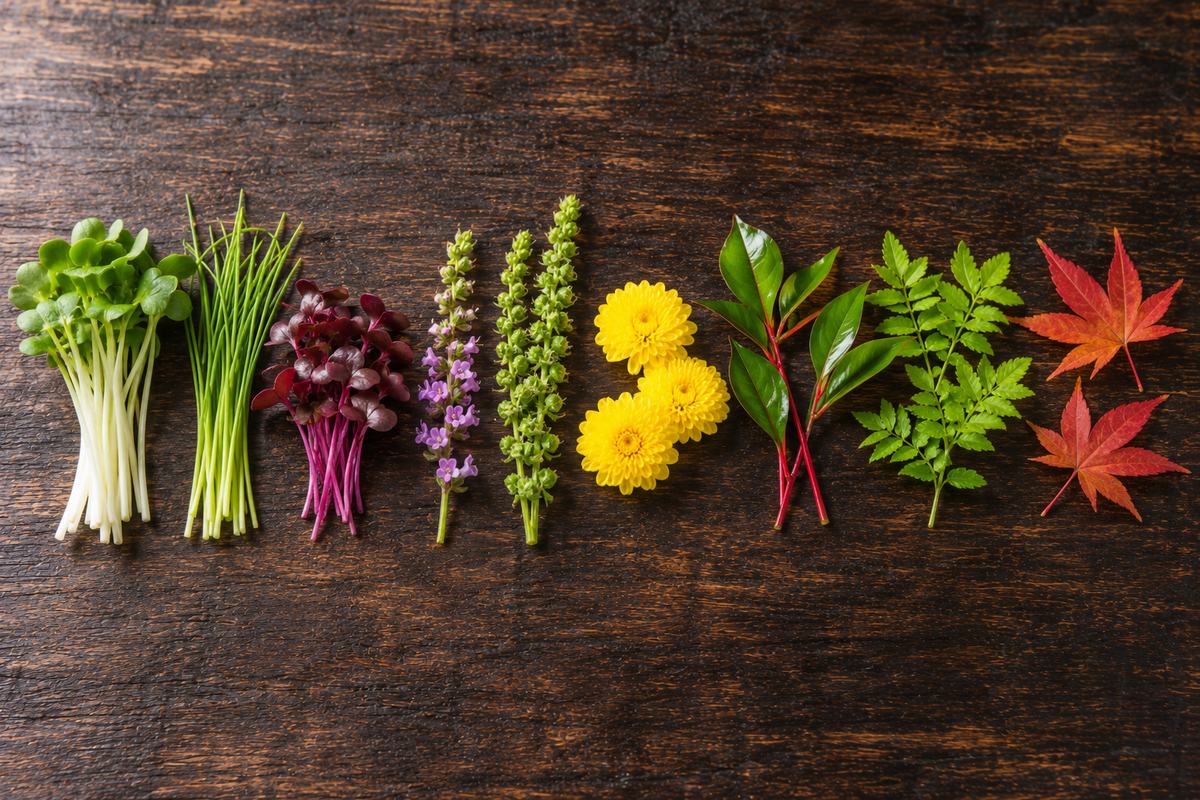
The small chrysanthemum is meant to have its petals plucked and scattered into soy sauce. Flower and seed spikes are stripped with chopsticks and eaten with the sashimi. Many garnishes that look purely decorative are actually meant to be eaten for their aroma.
What is eaten and what is not
Some garnishes are not eaten.
- Not eaten: nandina leaves, clubmoss (ritsukei) and aspidistra leaves. Used as liners and decoration
- Grown to be eaten: maple leaves, small chrysanthemums, snapdragons and others. Only plants grown for food are used, never plants picked from the hills or gardens
Nandina (nanten) sounds like 'turning away misfortune' in Japanese, so it is a lucky garnish for celebrations. The custom of placing a nandina leaf on sekihan (red bean rice) combines good luck with the leaf's reputed preservative effect.
Ornamental flowers from florists are not grown to be eaten. Always use flowers sold specifically as edible.
Garnishes that show the season
Showing the season is one of the most important roles of tsumamono.
- Spring: kinome, young sansho leaves, added to bamboo shoots and clear soups as the scent of spring
- Summer: green bamboo leaves and ice, to look cool
- Autumn: coloured maple leaves and chrysanthemums, to show autumn deepening
- Celebrations and New Year: lucky leaves such as nandina and pine needles
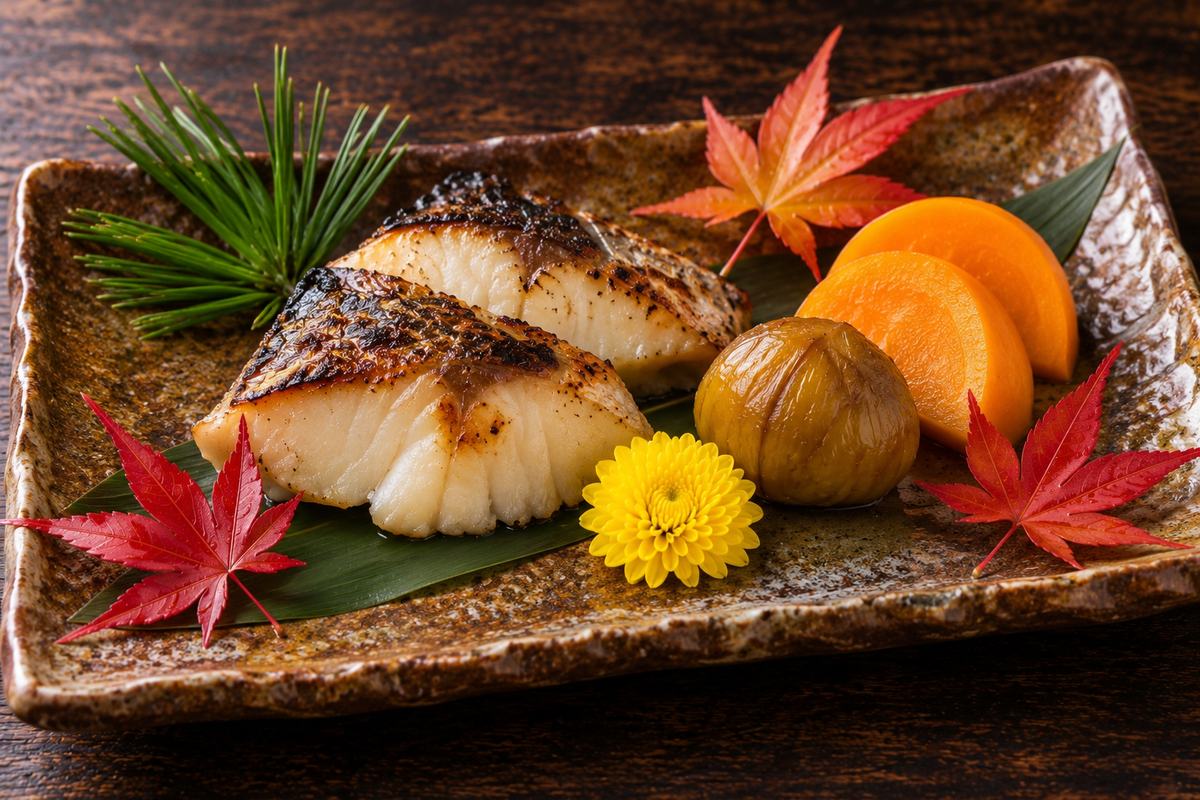
Japanese restaurants can mark each month simply by changing the leaves and flowers on the same dish. Tsumamono are a way of showing shun, the season that Japanese cuisine values so highly, to the eye.
Why they are available all year: greenhouse growing in Toyohashi, Aichi
Shiso leaves, flower spikes, edible chrysanthemums and other tsumamono are grown in greenhouses and shipped all year round. The centre of production is the eastern Mikawa area of Aichi Prefecture, especially Toyohashi City.
According to Aichi Prefecture, Aichi's shiso output in 2023 was worth 13.9 billion yen, the largest in Japan and about 70% of the national total. Aichi also ships about half of Japan's edible chrysanthemums. Toyohashi's shiso flower spikes were registered as 'Toyohashi Hanaho' under Japan's Geographical Indication (GI) system in 2025.
12 April is registered as 'Toyohashi Tsumamono Day', marking spring, when shipments start to increase.
Mountain leaves for fine restaurants: Irodori in Kamikatsu, Tokushima
The best-known example of shipping mountain leaves such as maple, nandina and persimmon as tsumamono is Irodori in Kamikatsu, Tokushima Prefecture.
It began in 1986, when a local man noticed restaurant customers taking home the leaves that garnished their food, and the town started selling the leaves that grow abundantly in its hills. Most of the growers are elderly residents, who take orders by computer or tablet and pick and ship the leaves themselves. It has become famous across Japan as the 'leaf business'.
Choosing and storing
The points below are general guidelines.
- Sprouts: deep-coloured leaves, straight stems, not wilted
- Flower and seed spikes: not too far into bloom or too full of seeds
- Flowers: not fully open, bright in colour, with undamaged petal edges
- Leaves: bright in colour, with undamaged edges
Tsumamono dry out easily and do not keep long. Wrap them in damp paper or keep them in their pack in the vegetable drawer, and use them quickly. Some are damaged by too much cold, so keep them away from direct cold air.
From an exporter's point of view
Tsumamono are light and valuable but short-lived, so they are mostly sent abroad by air. Toyohashi Hanaho has been exported to the EU, the United States and elsewhere for about 20 years, with demand growing as Japanese cuisine spreads.
Fresh leaves and flowers count as plants, so the importing country's plant quarantine rules apply. Whether they can be imported, and which inspections and certificates are needed, depend on the item and the country. Always confirm the importing country's conditions before trading.
Washokuzai Calendar's item pages show when each garnish is in season and available, and how to choose it.
Ingredients mentioned here
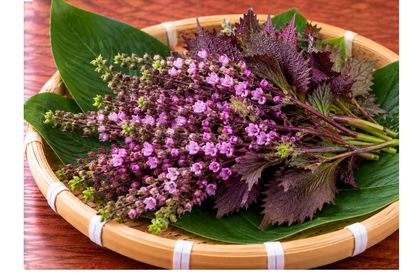 Shiso flower spikeSep–Oct
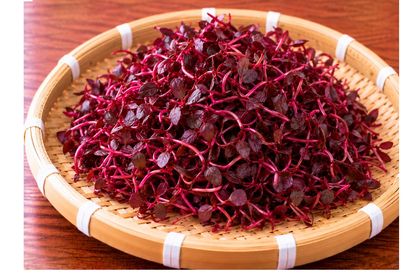 Red water pepper sprout
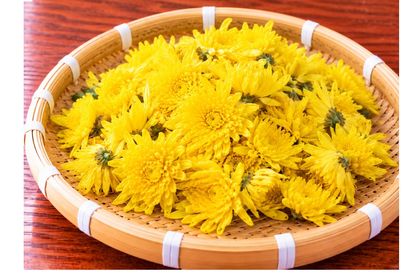 Edible chrysanthemum flower
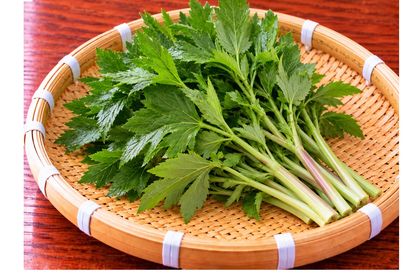 Beach silvertop
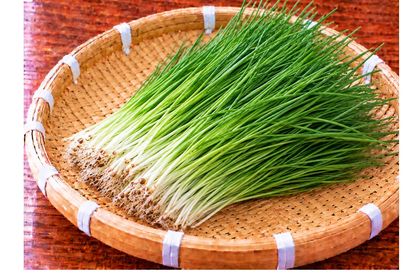 Negi sprouts
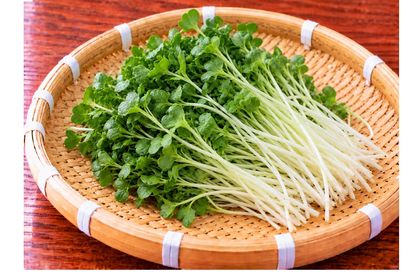 Daikon sprouts
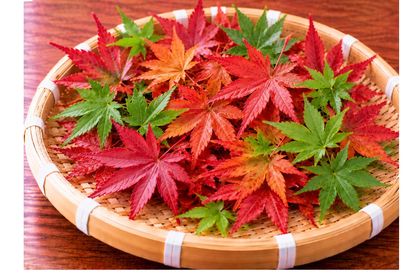 Edible maple leafSep–Oct
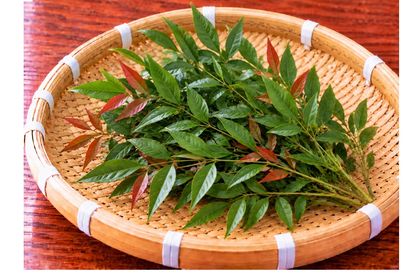 Nandina leaf (decorative)