2026-11-09
See what is in season at a glance: how to use Washokuzai Calendar
Washokuzai Calendar shows, month by month, when 250 Japanese ingredients (seafood, vegetables and fruit) are at their best and when they are in the market. It is available in Japanese, English, Thai, Traditional Chinese and Simplified Chinese. Here is what it does and how to use it.
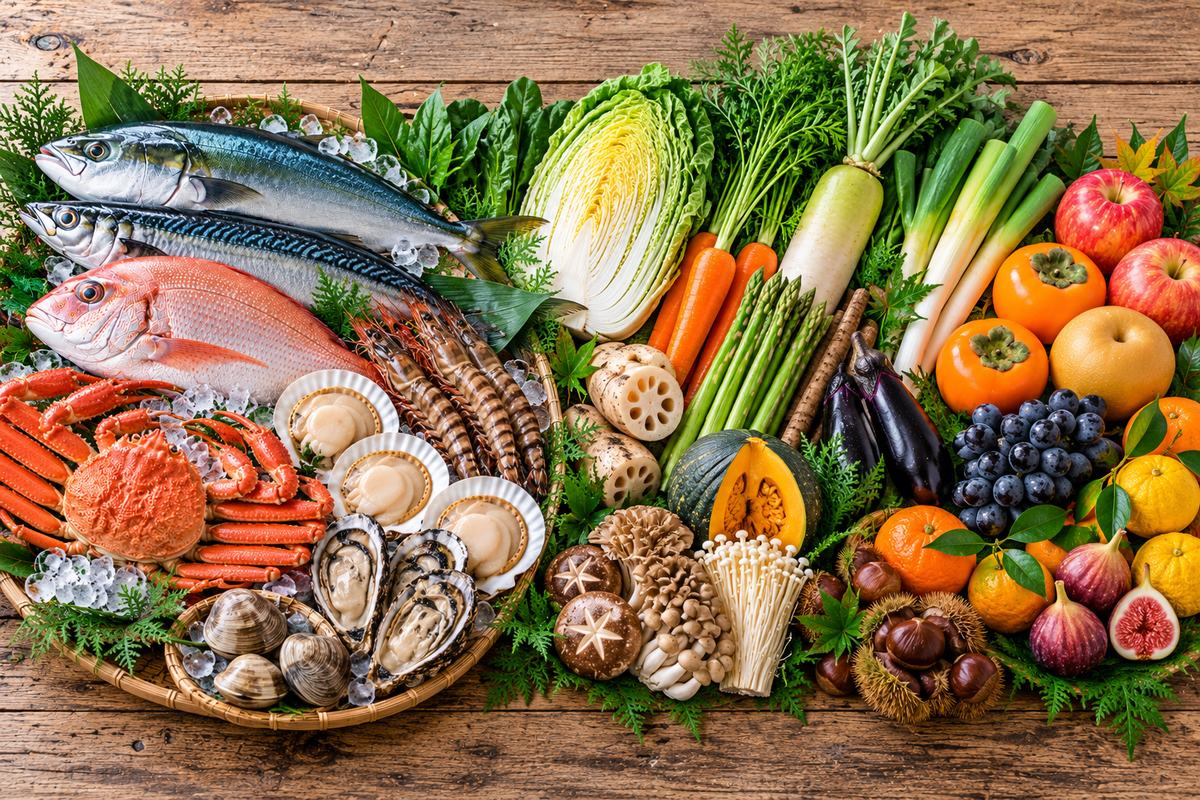
Washokuzai Calendar shows, month by month, when Japanese seafood, vegetables and fruit are at their best and when they are in the market. It can be read in five languages: Japanese, English, Thai, Traditional Chinese and Simplified Chinese. This article takes a fresh look at what the site does and how to use it.
What is Washokuzai Calendar?
It covers 250 ingredients in all: 100 kinds of seafood, 100 vegetables and 50 fruits. Each has its own page with a photograph and notes on how to cook it, how to choose it, how to store it and where it is grown or landed.
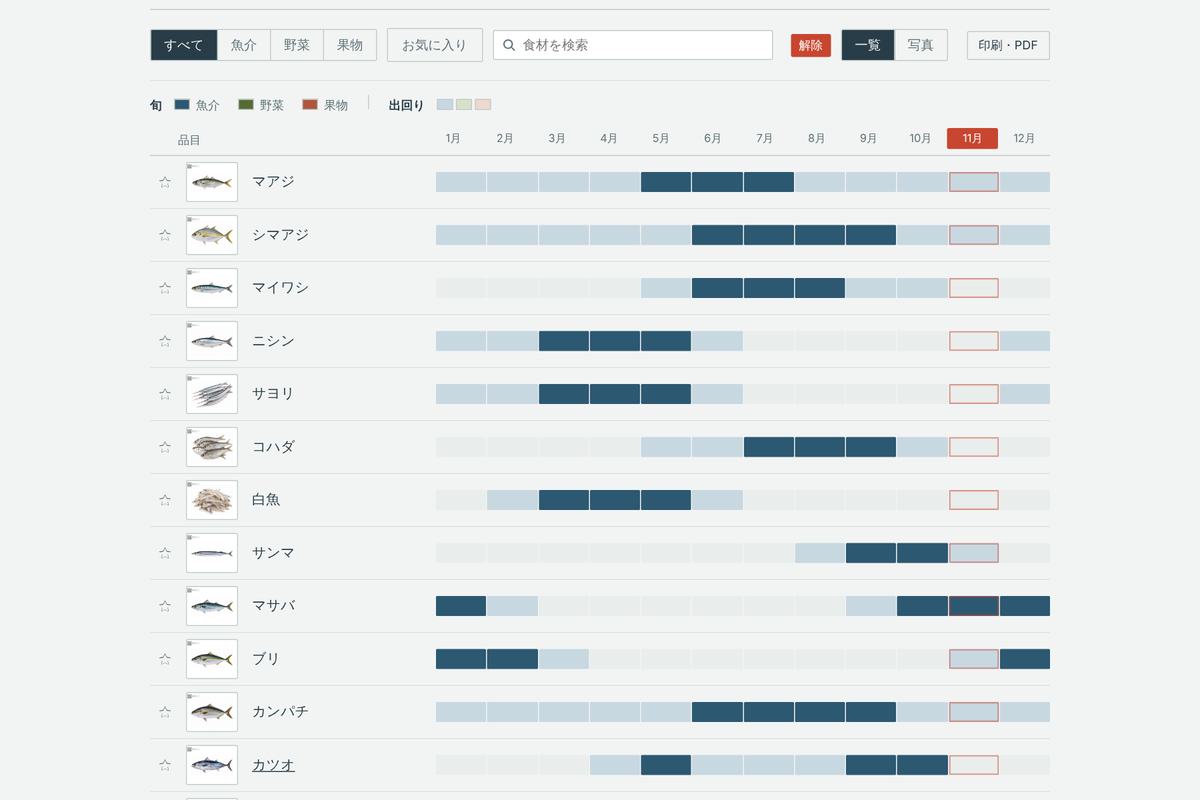
Timing is shown in two shades. The dark shade is when the ingredient is at its best (in season); the light shade is when it is available in the market. So you can see not only the peak, but also the first of the season and the last of it.
When it helps
- Choosing seasonal fish or vegetables for tonight's dinner
- Planning next month's specials or purchasing at a restaurant
- Explaining Japan's seasons to chefs and buyers overseas
- Looking up the name or season of something you saw at a market or shop
The seasonal calendar: all 250 ingredients in one table
The seasonal calendar shows the whole year for every ingredient in a single table, with the current month highlighted so you can see at once what is in season now. You can switch between seafood, vegetables and fruit, search by name, or view everything as photos. Star the ingredients you care about to see only your favourites, and print the table or save it as a PDF.
Other ways to find ingredients
- By month: a page for each month lists what is in season, by seafood, vegetables and fruit
- By type: separate lists for seafood, vegetables and fruit
- By region: pick any of Japan's 47 prefectures to see its main ingredients
- All ingredients: a list of all 250 items
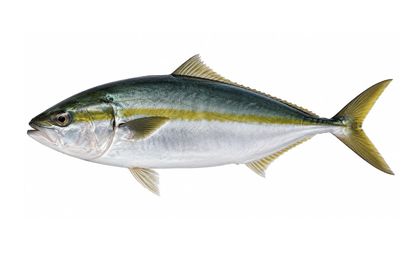
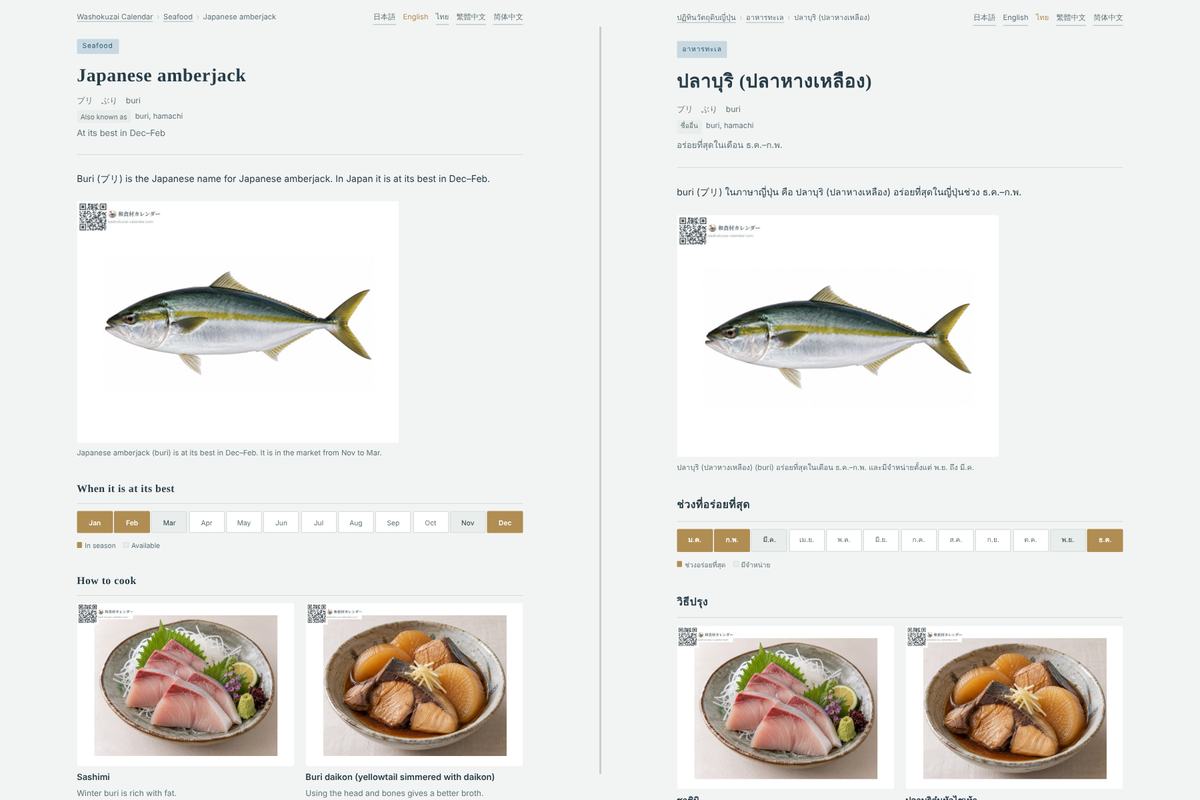
- Search: works not only with the item name but with other names, kanji, hiragana and romanised spelling. 'hamachi' or 'buri' both find Japanese amberjack
What each ingredient page tells you
Tap an ingredient's name to open its page.
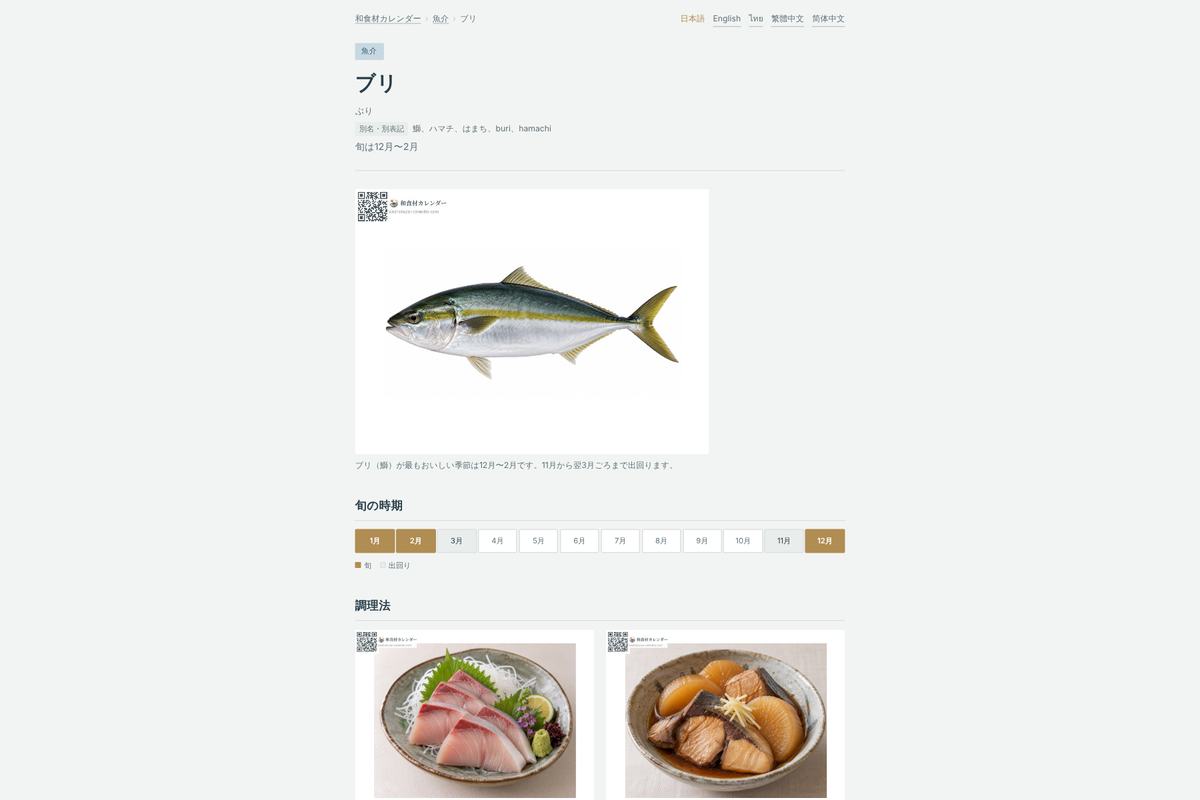
- The months it is in season and the months it is available
- A photograph and around four ways to cook it
- How to choose it and how to store it
- Where it mainly comes from
- Background notes on its history or growing regions
- Its other names, kanji and romanised spelling
- Other ingredients in season at the same time
Five languages
Use the language switch at the top of the page to choose Japanese, English, Thai, Traditional Chinese or Simplified Chinese. Ingredient names use the name that works in each language: buri, for example, is Japanese amberjack in English and ปลาบุริ in Thai.
Every language version also shows the Japanese name and its romanised spelling, so when you talk to a supplier or customer in another country, you can be sure you mean the same ingredient. Send them the page in their own language and they can read it straight away.
Seasonal articles
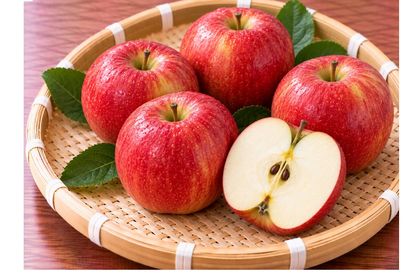
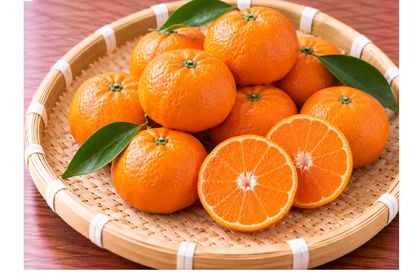
Our articles look at ingredients through the lens of the season, from seasonal topics such as the opening of snow crab season, winter hotpots and the year-round relay of Japanese citrus, to in-depth pieces on a single ingredient such as winter yellowtail, sweet potatoes and apples. We aim to publish one a week.
On your phone
Add the site to your phone's home screen and it opens in one tap, like an app. Nothing needs to be installed. We also share seasonal ingredients on Instagram (@washokuzai.calendar).
Please note
- The months shown are general guides for Japan as a whole. Actual timing varies with region, fishing method and each year's weather
- Some photographs were created with generative AI and may differ from the real thing in small details
- Please do not reuse our photographs without permission. For use in publications, please contact us
- For questions or corrections, write to support@washokuzai-calendar.com